

Welcome to GuitarTuners.com.au! If you’ve landed here, you’re likely curious about the electrifying world of electric guitars. You might be asking yourself, “What exactly is an electric guitar, and how can I learn to play it?” You’ve come to the right place. Let’s plug in and explore!
What is an Electric Guitar?
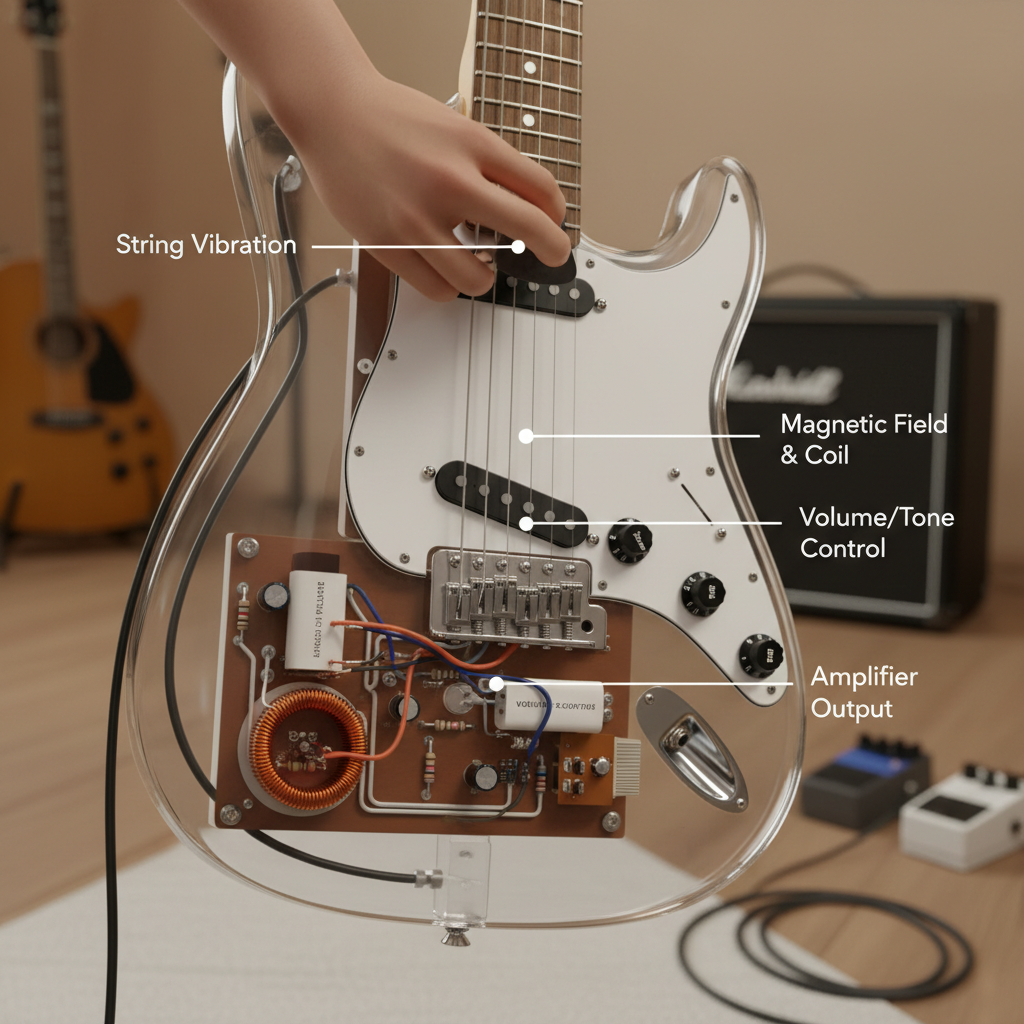
At its core, an electric guitar is a stringed instrument that uses electromagnetic pickups to convert the vibration of its steel strings into electrical signals. Unlike its acoustic cousin, an electric guitar itself produces very little audible sound without being connected to an amplifier. This electrical signal is then sent to an amplifier, which boosts the signal and projects the sound through speakers. This process allows for a wide range of tonal possibilities, from clean and bright to distorted and heavy, making the electric guitar incredibly versatile across countless music genres.
When you compare an acoustic guitar or electric guitar, the fundamental difference lies in how they produce sound. Acoustic guitars rely on a hollow body to resonate and amplify string vibrations naturally. Electric guitars, on the other hand, rely on electronics to create their signature sound.
How Does an Electric Guitar Work?
Understanding how electric guitars work is fascinating. Here’s a simplified breakdown:
- Strings: Electric guitars typically use steel strings, which are ferromagnetic.
- Pickups: These are essentially magnets wrapped with coils of wire, located beneath the strings. When you pluck a string, its vibration causes a disturbance in the magnetic field of the pickup.
- Electrical Signal: This disturbance induces a small electrical current in the wire coils.
- Output Jack: The electrical current travels through the guitar’s internal wiring to the output jack.
- Cable: A cable connects the guitar’s output jack to an amplifier.
- Amplifier: The amplifier receives the weak electrical signal, boosts it significantly, and often allows for tone shaping (bass, treble, etc.) and effects (reverb, distortion).
- Speaker: Finally, the amplified signal is sent to a speaker, which converts the electrical energy back into audible sound waves.
This ingenious system is how the electric guitar works to create its iconic sounds, allowing players to manipulate their tone with effects pedals and different amplifier settings.
How Can I Learn to Play Electric Guitar?
So, you want to learn how to play electric guitar? Fantastic! It’s a rewarding journey. Here’s a roadmap to get you started:
1. Get Your Gear
- Electric Guitar: Start with an entry-level or mid-range electric guitar. You don’t need the most expensive model to begin.
- Amplifier: A small practice amp is perfect for beginners.
- Cable: To connect your guitar to the amp.
- Picks: Experiment with different thicknesses.
- Tuner: Essential for keeping your guitar in tune! Check out our range of guitar and tuners, including Fender tuners. You’ll need to learn how to tune guitar electric regularly.
- Strap: If you plan to play standing up.
2. Learn the Basics
- Guitar Anatomy: Familiarize yourself with the parts of your guitar.
- Holding the Guitar: Proper posture is key for comfort and technique.
- Tuning: This is non-negotiable! Always tune your guitar before playing.
- Basic Chords: Start with open chords like G, C, D, E, A, Em, Am.
- Strumming Patterns: Learn simple up and down strokes.
- Finger Exercises: Develop finger strength and dexterity.
3. Practice Consistently
Regular practice is the most important factor in learning playing electric guitar. Even 15-30 minutes a day is more effective than one long session once a week.
- Use Online Resources: YouTube tutorials, guitar learning apps, and websites offer a wealth of free lessons.
- Consider a Teacher: A good instructor can provide personalized feedback and guidance.
- Learn Songs: Start with simple songs you enjoy. This makes practice fun and keeps you motivated.
- Experiment: Don’t be afraid to experiment with different sounds and techniques.
4. Maintenance
Knowing how to restring electric guitar is a valuable skill. Old strings can sound dull and affect tuning stability. We have guides on how restring electric guitar and how to string an electric guitar to help you out.
Learning to play electric guitar is a journey, not a race. Be patient with yourself, celebrate small victories, and most importantly, have fun!
Leave a Reply